The Gift It Took a Lifetime to Appreciate
In 1996, America lost its mind over a $30 toy. Tickle Me Elmo—a giggling, shaking plush doll—created a shopping frenzy that turned ordinarily rational parents into warriors. Store clerks were trampled. Fistfights broke out in toy aisles. Parents paid $500, $1,000, even $1,500 to scalpers, desperate to fulfill their child’s Christmas wish.
My daughter was four years old that Christmas, and mercifully, she had no interest in Elmo. I breathed a sigh of relief because there’s no way I could’ve justified spending even $300 for a $30 toy. I don’t fault the parents who did.
There’s nothing wrong with wanting to give your children good gifts—God himself delights in giving good gifts to his children. But here’s what I’ve learned: toys and gifts should supplement the time and attention children crave from their parents. As a substitute, they fail completely.
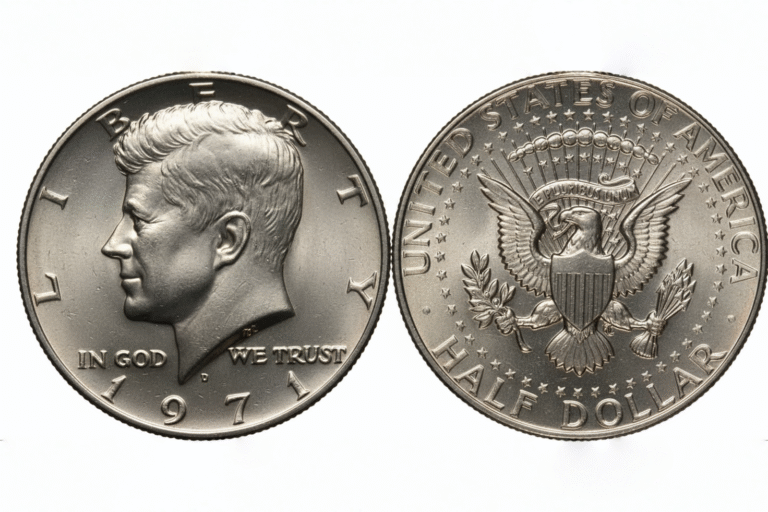
Elvis Presley understood this intellectually. In 1971, he commissioned a poem for Lisa Marie’s fourth birthday declaring that “a whole lifetime of love” was the priceless gift that mattered most. Yet he kept showering her with mink coats and diamond rings—extravagance born of absence and guilt after his divorce from Priscilla. He had endless wealth but couldn’t buy back the time his career stole.
My father had the opposite problem: no wealth, but he was there.
I can only remember one special toy I desperately wanted as a child. It was called Secret Sam—a plastic attaché case containing a toy gun, a working camera, and an assortment of spy gadgets that made a six-year-old boy’s heart race. In 1966, it cost about $12, which in today’s money would be roughly $120 invested in a kid’s toy.
I didn’t know it then, but that would’ve been a stunning amount of money for my father who grew up during the worst years of the Great Depression. I can’t imagine his initial thoughts on buying it at such a price, but I know that sometimes his heart would overrule the thrift his brain enforced. His heart won those battles more than once during my childhood birthdays and Christmases, but all I knew was: I wanted something and my father got it for me.
At five or six years old, I had absolutely no conception of money beyond knowing it cost a nickel to buy a candy bar or a dime to buy a Dr Pepper. I would eventually teach economics for a living, yet as a child I was blissfully ignorant of what anything actually cost—especially what things cost him.
Many years later, after I had three children of my own and very shortly before pancreatic cancer took my father, I began to understand his ultra-cautious, frugal ways and how they were an expression of his love and care for us.
Today, 30 years after his death, I understand what that $12 really bought: not Secret Sam, but a memory of a father’s love.
My wife’s father was born just a few weeks before my own father in 1918, and they shared remarkably similar sentiments about money and parenting. Years ago, he told me about a conversation with a coworker who had made some successful investments and amassed a modest fortune. The man wanted everyone to know about his affluence. He bragged that when his boys turned 18, he bought each one of them a new Cadillac.
In retrospect I love my father-in-law’s reply: “I haven’t given a thing to my kids because I want them to know they’ll have to work for a living.”
At 20 years old it seemed slightly harsh to me at the time, and it was certainly an overstatement. He faithfully provided for his children—but there were lines he wouldn’t cross.
In 1966, my father made the decision to cross the line for my Secret Sam. My father-in-law drew the line at Cadillacs. Both decisions were acts of love from men who understood what the Great Depression had taught them: that character matters more than comfort, that struggle builds strength, and that the greatest gift you can give your children isn’t what money can buy.
Over 40 years of marriage, my wife and I have often talked about how the way we were raised helped us not just survive, but thrive during the ups and downs of our lives. Our fathers knew something the Elmo-crazed parents of 1996—and the Cadillac-buying investor—didn’t: Children don’t need everything. They need parents who know the difference.
Proverbs 22:6 says, “Train up a child in the way he should go; even when he is old he will not depart from it.” Our fathers trained us in the ways of wisdom, not indulgence—and while there were times we chose to cross the lines, we haven’t departed from it.